New Delhi [India], January 8: Renowned Japanese scholar and linguist Professor Tomio Mizokami, a Padma Shri awardee and Professor Emeritus of Osaka University, continues to be hailed as one of the most influential cultural ambassadors between India and Japan, for his unparalleled contribution to Indian languages, literature, and education.
Professor Mizokami was conferred the Padma Shri in 2018 by the President of India at the Civil Investiture Ceremony at Rashtrapati Bhavan for his outstanding service in the fields of literature and education, particularly for promoting Indian languages and culture in Japan.
A Scholar Deeply Rooted in India
Born in 1941 in Kobe, Japan, Tomio Mizokami developed a fascination for Indian culture at a young age. He graduated from the Department of Indian Studies, Osaka University of Foreign Studies, in 1965, and soon travelled to India to pursue advanced studies.

Between 1965 and 1968, he studied Hindi in Allahabad and Bengali at Visva-Bharati, immersing himself in India’s linguistic and cultural diversity. He earned his PhD from the University of Delhi in 1972, followed by another doctoral research on Language Contact in Punjab, a pioneering sociolinguistic study of migrant communities.
A Global Advocate of Indian Languages
Professor Mizokami spent decades teaching Indian languages at Osaka University, later retiring as Professor of Indian Languages and continuing as Professor Emeritus since 2007. He also taught Punjabi at the University of California, Berkeley, expanding his influence beyond Asia.
Fluent in more than a dozen languages, including Hindi, Punjabi, Bengali, Urdu, Gujarati, Marathi, Kashmiri, Sindhi, Tamil, English, German and French, he is widely regarded as the first Japanese scholar to undertake systematic research on Punjabi language and linguistics.
ICCR on Mizokami’s Cultural Contribution
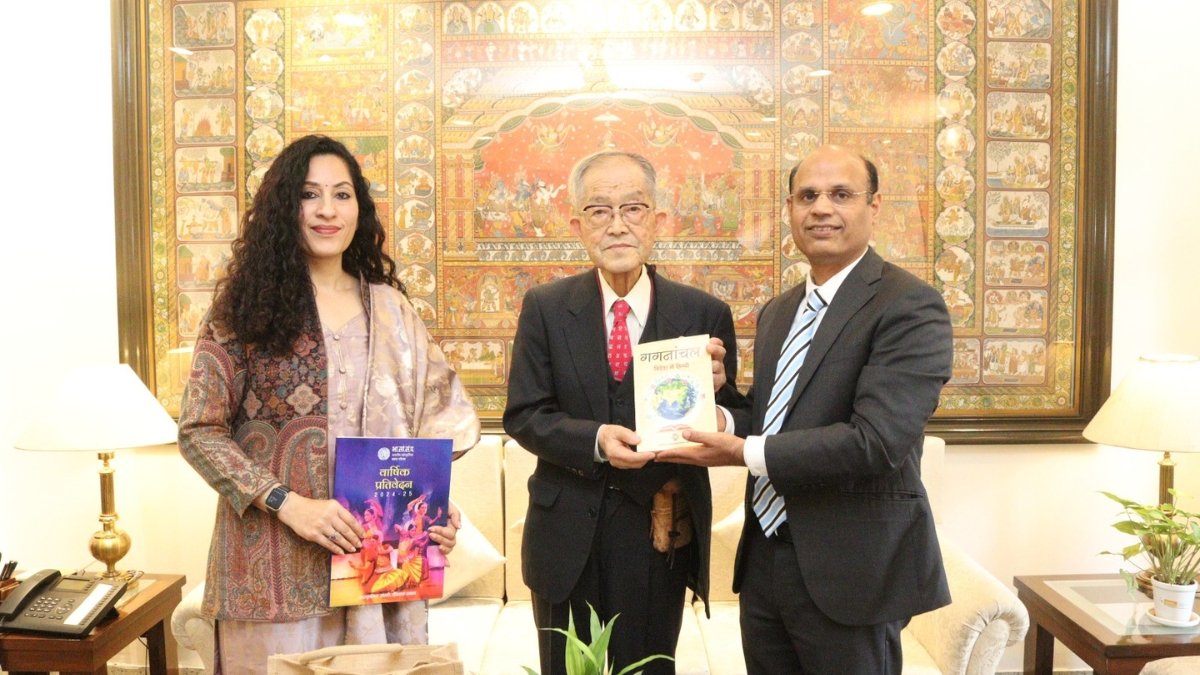
The Indian Council for Cultural Relations (ICCR) has consistently recognised Professor Mizokami’s role in strengthening people-to-people ties between India and Japan.
“Professor Tomio Mizokami embodies the essence of cultural diplomacy. His lifelong commitment to Indian languages has helped generations of Japanese students understand India beyond geography,” an ICCR official said.
“His scholarship and translations have played a vital role in deepening India–Japan cultural relations.”
PM Modi’s Recognition at G7 Summit
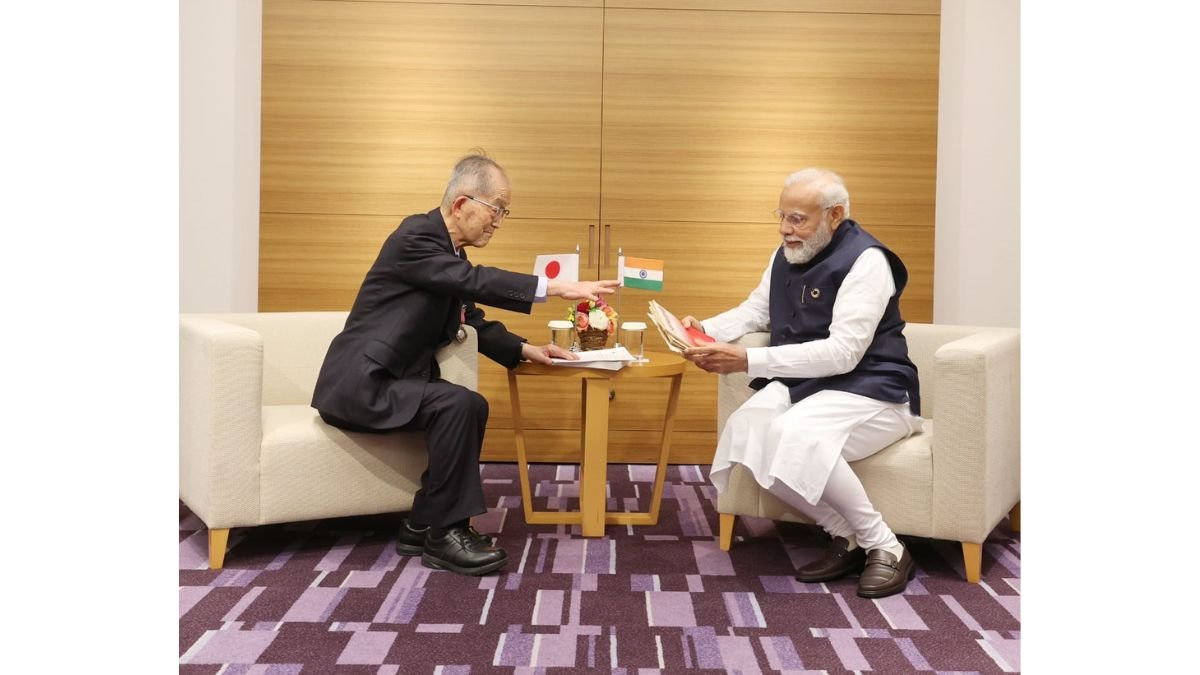
Professor Mizokami’s contribution received global attention during the G7 Summit in Hiroshima, when Prime Minister Narendra Modi met him personally and acknowledged his lifelong dedication to Indian culture.
“People like Professor Mizokami have built enduring bridges between India and Japan through language and literature,” Prime Minister Modi said, praising his efforts to popularise Indian languages and values in Japan.
The interaction was widely seen as a moment of pride for cultural scholars and a reaffirmation of the importance India places on soft diplomacy and cultural exchange.
Translations, Publications and Spiritual Dialogue
Among his most celebrated works is the Japanese translation of Guru Nanak’s Japji Sahib, the foundational Sikh prayer, which introduced Sikh philosophy to Japanese readers. He also translated The Sikhs: Their Religious Beliefs and Practices into Japanese.
His publications — including Introductory Punjabi, Punjabi Reader, Practical Punjabi Conversation and Language Contact in Punjab — are considered essential academic resources in Indian linguistics.
Reflecting on his lifelong association with India, Professor Mizokami has said:
“Through Indian languages, I discovered not just words, but India’s soul — its diversity, spirituality and human warmth.”
A Living Symbol of India–Japan Friendship
As India and Japan continue to strengthen strategic and cultural cooperation, Professor Tomio Mizokami’s life stands as a testament to the power of language, learning and mutual respect. His work has ensured that India’s literary and linguistic heritage continues to resonate far beyond its borders.
By Amit Deshmukh
Disclaimer: Views expressed above are the author’s own and do not reflect the publication’s views.